Yakishime tea set, small, with lid and tray
Couldn't load pickup availability
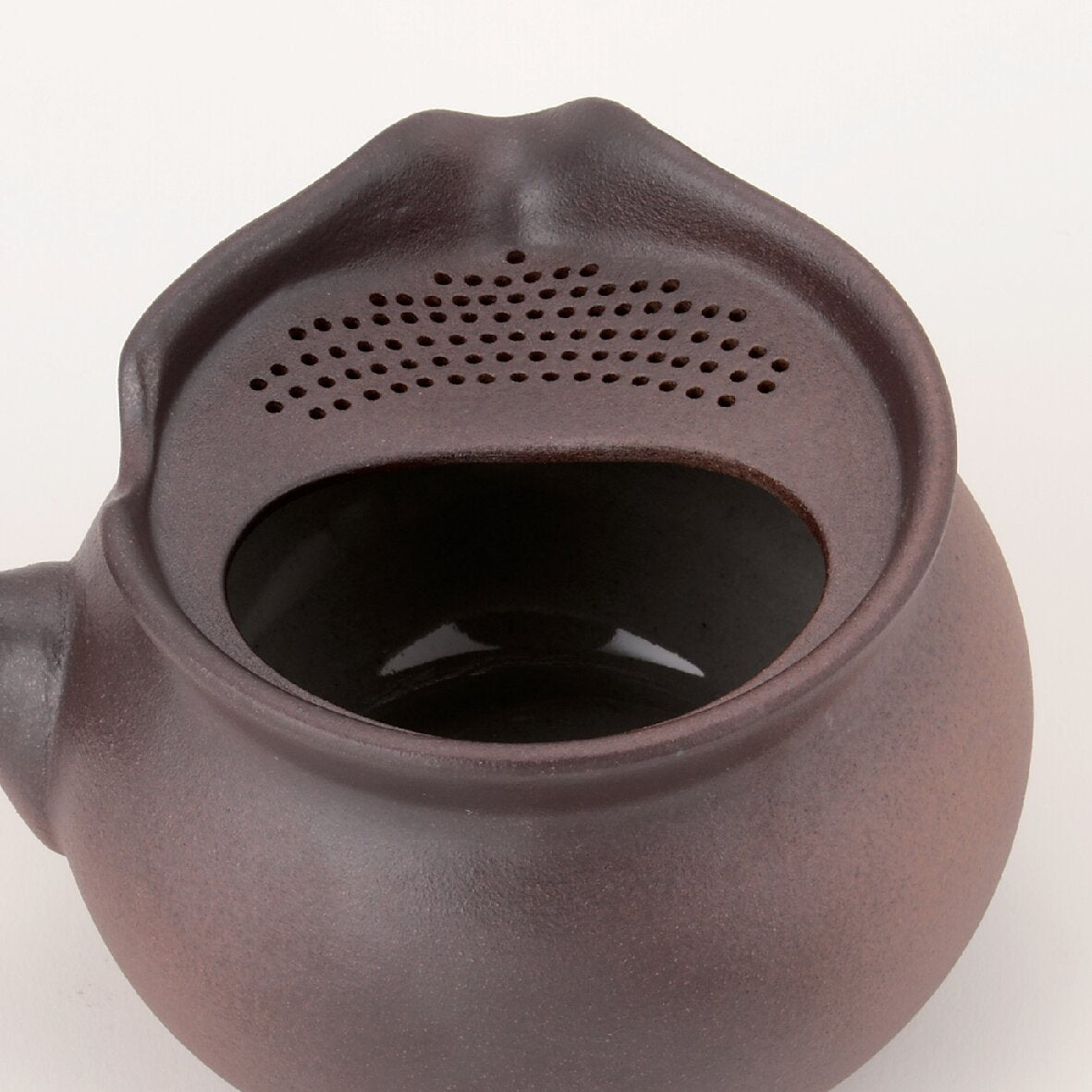
<Fujiso Pottery> Yakishime tea set, small, square, with lid and plate. 1 teapot, 1 plate, 2 bowls. Teapot: approx. H9.5 (including lid) x D10.5cm (excluding handle), capacity approx. 300ml, bowl: approx. H4 x D6cm, capacity approx. 50ml, plate: approx. H2 x D10.2cm. Ceramic. Made in Japan. *Microwave safe. As this is a handmade product, the color, pattern and size may vary. The handle is made into a square shape to make it easier to hold, and the edge of the lid is hollowed out slightly to allow the lid to be held down with the thumb. The tea strainer holes in the teapot are carefully drilled by hand by craftsmen. More delicious and easier to use than Mie Prefecture An evolution of the Banko-yaki teapot Banko-yaki is a type of pottery that is handed down in the areas around Yokkaichi City and Komono Town in Mie Prefecture. It is known for its earthenware pots and teapots, which account for about 80% of domestic production, and is a rustic and warm pottery. It began in the Genbun era (1736-1740) of the Edo period, when a wealthy merchant from Kuwana, Numanami Rozan, had a passion for tea and built a kiln in what is now Asahi-machi, Mie-gun, and fired tea utensils himself. It developed because the area was blessed with high-quality clay and forests to provide firewood for the kiln, and was adjacent to Yokkaichi Port, which allowed tea utensils to be transported by sea without being damaged.
It is said that "tea brewed in a Banko teapot is delicious," and the reason for this lies in the clay and firing. The purple clay teapots that represent Banko ware are made using red clay that is rich in iron, and the product is fired in a "reduction firing" process that uses oxygen. This changes the iron in the base material, which reacts with the tannins in the tea, softening its astringency and making it taste mellow.
This teapot was created to enhance the flavor of tea and make it even easier to use. It is manufactured by Fujiso Seitosho, a company established in Yokkaichi City in 1907. "I aimed to create a convenient tool that would make tea delicious when I use it," says Fujii Kenji, the fourth-generation owner. It took about two years to complete the teapot, with the user in mind. First, they eliminated the tea strainer, which affects the flavor of tea and is difficult to clean. Instead, they drilled holes in the spout of the main body. The shape was taken using a plaster mold, and when the base was the perfect hardness for drilling holes, craftsmen used specially made tools to drill them by hand. There were about 100 of them, but the size and number of holes greatly affected the flavor of the tea, so they made many prototypes.
The V-shaped spout allows you to pour every last drop of tea without dripping, the inside is coated with glass glaze to prevent tea stains and tea leaves from sticking, and the recess where you can place your fingers to hold the lid is also surprising when you actually hold it in your hand. The fourth generation owner says, "Tradition is something that is created." Tradition will eventually fall into disuse if it is only preserved. This teapot truly embodies the company's desire to "create things that will become 'traditional' in 100 years."
The lid plate in the set can be used not only to place the lid, but also for sipping tea. If you pour tea leaves and a small amount of hot water into the bowl and drink it, you will be able to feel the aroma and sweetness more strongly. The name "Banko" comes from the aforementioned Numanami Rozan stamping the "Banko" or "Banko Fueki" seal on his tea utensils so that they would last forever without changing. As the name suggests, you will want to keep it close at hand for a long time and use it with care.
*Items will be shipped within 5 days to 1 week of purchase.